
At the benchmark Lasalgaon Agricultural Produce Market Committee (APMC) mandi, the model onion price shot up to Rs 21.50 a kg on Thursday, as against Rs 16.50 a kg on Wednesday. This was the highest since February 11.
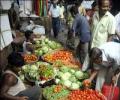
However, risks to the outlook stems from possible sub-normal monsoon and higher crude oil prices (on account of the crisis in Iraq)," the Economic Survey 2013-14 tabled in Parliament by Finance Minister Arun Jaitley said.

The rate of price rise of food items stood at 12.68 per cent in the corresponding week of the previous year.
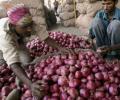
The crop is currently trading at Rs 22 a kg compared to Rs 12.50 one month ago.

Apart from the human body, human food will bear direct repercussions. From staples such as wheat, to coffee, dairy, and even the great Hilsa face the threat of reduced supply due to the extreme heat.

Finance Minister Pranab Mukherjee termed the rise in food inflation as an area of 'grave concern'.

The Centre on Monday directed cooperatives NCCF and NAFED to sell tomatoes at a reduced rate of Rs 50 per kilogram from Tuesday in view of the decline in prices in the wholesale markets. Since July, both NCCF and NAFED have been selling tomatoes at a discounted rate on behalf of the consumer affairs ministry in Delhi-NCR, Uttar Pradesh, Rajasthan and Bihar to boost domestic availability and contain price rise. Initially, the ministry had asked the two cooperatives to sell tomatoes at a subsidised rate of Rs 90 per kg and later reduced the price to Rs 80 per kg. Further, the price was cut to Rs 70 per kg.

The central bank is struggling to do so, after unleashing a panicky expansionary policy after the Lehman crisis.

Indian households database Consumer Pyramids answers why two years of high inflation did not matter to the consumers of the country.

Wal-Mart India said it will "engage and work" with the new government and continue to focus on the cash and carry business in the country in the backdrop of Narendra Modi led BJP getting mandate to come to power at the Centre.
Overall the inflation in vegetable segment was 8.57 per cent as compared to about 4 per cent in February.

In February last year, it was 9.54 per cent.
Declining inflation may present a case for further monetary policy easing.
The rate of price rise of food items was over 15 per cent during the same week last year.

The WPI inflation for September rose to 7.81 per cent, from 7.55 per cent in August.
Overall, vegetables were 47.06 per cent cheaper during the week under review, from the same period last year.

Inflation jumped to 4.78 per cent in November, driven by rising prices of essential food items like pulses, fruits and vegetables.
Food inflation remained in the negative zone for the third straight week, at (-)0.42 per cent for the week ended January 7, mainly due to fall in prices of onion and vegetables.

Production in Karnataka and Madhya Pradesh are likely to be higher this year.
According to official data released on Thursday, onions grew cheaper by 59.04 per cent year-on-year during the week under review, while potato prices were down by 33.76 per cent.

Overall inflation, as measured on the basis of the Wholesale Price Index, has been revised to 9.04 per cent for March from the original projection of 8.98 per cent.

Inflation in food articles, which have a 14.3 per cent share in the WPI basket, however witnessed an increase as onion prices shot up during the month.

Food inflation, as measured by the Wholesale Price Index, stood at 11.81 per cent in the previous week ended October 29.
Food inflation was recorded at 9.23 per cent in September.

The chances of ending the current fiscal year at anywhere near the 5.5 per cent that RBI officially targets seem bleak indeed.

The Commerce and Industry Ministry will soon seek Cabinet nod to give out inflation data every month instead of the present practice of weekly release.

The present monthly inflation measurement system, based on the wholesale price index, reflects the price variations of 435 items.
Food inflation, as measured by the Wholesale Price Index, stood at 6.6 per cent in the previous week.

Despite admitting to price pressures both from food items and input prices, RBI Governor Shaktikanta Das on Wednesday hoped that a normal Southwest monsoon will have a "soothing impact" on inflation pressures and ruled out any wide variations in medium-term inflation forecast from what was given in April. In an unscheduled address earlier in the day amidst the raging pandemic, Das said the overall outlook for the economy is highly uncertain and is clouded with downside risks. He offered a slew of relief and liquidity measures to individuals and small businesses apart from a Rs 50,000 crore special liquidity window to the healthcare sector.
Inflation declined marginally to 8.23 per cent in January from 8.43 per cent in the previous month, as prices of certain commodities like wheat, pulses and sugar eased, although essential items like onion and other vegetables continue to remain dearer.
Prices of most commodities, barring wheat, continued to remain firm on an annual basis, as per Wholesale Price Index data released by the government in New Delhi.

The rate of price rise stood at 8.87 per cent in August, 2010.

Inflation declined marginally to 7.45 per cent in October even though prices of food items like rice, wheat pulses and potato showed a rising trend.
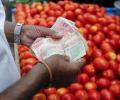
The agriculture ministry projects India's tomato output at 19.69 million tonnes in 2016-17 (July-June)
Although the WPI-based inflation has been in the negative for two consecutive weeks, the Consumer Price Index, which measures movement in the prices that consumers pay, reported double-digit increase in May.
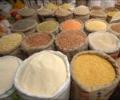
Inflation rose to 7.81 per cent in September, from 7.55 per cent in August.

Fitch Ratings on Thursday slashed India's GDP growth projection for FY23 to 7 per cent, saying the economy is expected to slow against the backdrop of global economy, elevated inflation and high interest rate. In June, it had forecast 7.8 per cent growth for India. "We expect the economy to slow given the global economic backdrop, elevated inflation and tighter monetary policy. "We now expect the economy to grow 7 per cent in the financial year to end-March 2023 (FY23) from 7.8 per cent previously, with FY24 also slowing to 6.7 per cent from 7.4 per cent before," Fitch said in its September edition of the Global Economic Outlook.
The time frame for this is difficult to specify and much depends on stability in the foreign exchange markets, Prime Minister's key economic advisor C Rangarajan said.
 © 2026 Rediff.com - Advertise with us - Disclaimer - Privacy Policy - Sitemap - Feedback - About us - Terms of use - Grievances